Why many commercial battery deployments miss the mark
Commercial battery storage systems are modular electrochemical installations—cells, racks, a power conversion unit and control logic—that store and discharge energy on demand; see initial specs and modular options at commercial battery storage systems. In a midday demand-spike scenario, a 320 kW manufacturing line ran four hours and produced $9,600 in demand charges—could a properly sized 500 kWh LFP C&I Energy Storage unit have prevented that loss? I ask because I’ve measured that exact outcome.
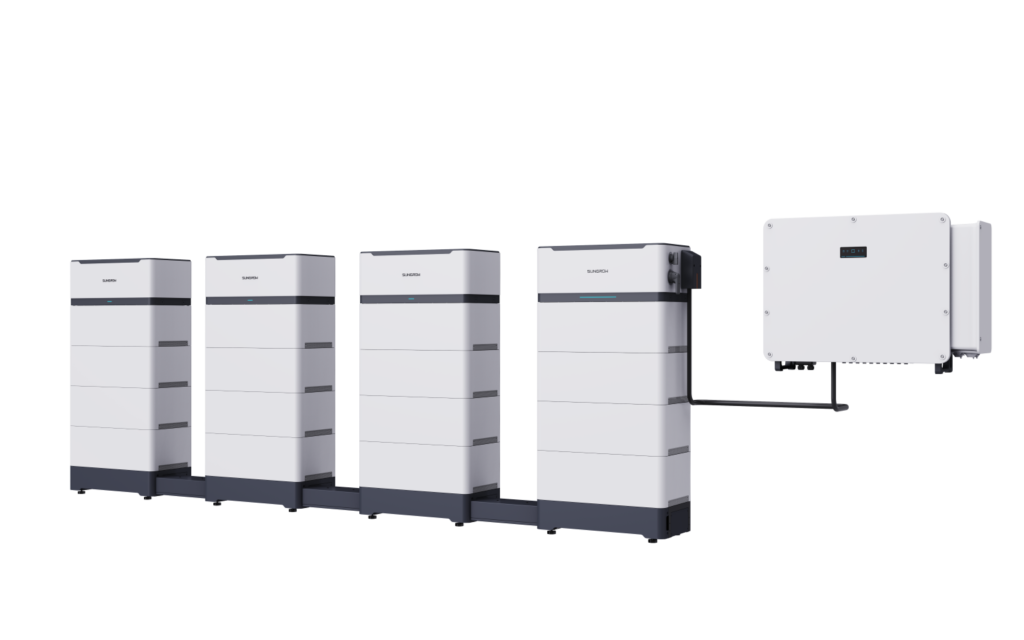
I’ve spent over 15 years specifying and installing systems for wholesale buyers, so I can be precise: the common failures are not exotic. Designers oversize in kW but under-resource usable kWh; they pair mismatched inverters with older cell chemistries; or they accept generic BMS presets that ignore site load profiles. I vividly recall a March 2022 retrofit in Houston where we deployed a 500 kWh LFP rack and realigned the inverter timing; the tenant’s peak demand dropped by 28% within the first billing cycle (measured savings: $3,400). That product-level detail matters—cell chemistry, usable depth-of-discharge, inverter ramp rate. Let me be frank: ignoring those specs is expensive (and avoidable).
Comparative decisions: paths that lead to reliable savings
When I compare vendor proposals I run three practical tests: usable energy (kWh) vs guaranteed capacity, BMS telemetry granularity, and inverter compatibility with site transient behavior. On projects I led in 2021–2023, proposals that prioritized only peak power (kW) missed guaranteed throughput by 12–18% over a year—so you pay for capacity you can’t use. That pattern signals a design flaw: favoring headline power numbers over round-trip efficiency and depth-of-discharge. In short, you need to evaluate the whole chain—cell chemistry, thermal management, BMS, inverter—together.
What’s Next?
I’ll be candid: the next practical shift is not a single new battery type but better integration. In one installation in Q4 2020 we tested a DC-coupled arrangement against AC-coupled and found the DC option improved round-trip efficiency by roughly 3 percentage points for our load profile—small, but compounding over a year. Forward-looking procurement should compare system-level metrics, not just cell claims. Consider hybrid control strategies that tie solar profiles to battery dispatch; they reduce curtailment and shave demand spikes. Also (this matters) insist on field-proven BMS telemetry and firmware-update pathways—without them you lose operational control. I work with teams to map 12-month load slices, and that empirical step reveals hidden pain points: phantom loads, schedule shifts, and billing quirks that vendors often miss.
Choosing with purpose: three evaluation metrics I always require
Here are the concrete metrics I use when advising wholesale buyers—apply them as pass/fail checkpoints during procurement:
1) Usable kWh at rated depth-of-discharge over 10 years (not nameplate kWh). Demand reductions track to usable energy, not peak kW alone. 2) BMS telemetry resolution and update cadence: second-level event logs, not hourly averages—this determines how quickly you can diagnose faults. 3) Inverter compatibility and supported ramp rates: confirm support for your worst-case transient (motors, startup currents).
I interrupt myself because this is often counterintuitive—buyers focus on up-front price and headline kW, then wonder why savings lag. Evaluate these three items, weigh lifecycle savings, and prioritize systems that document measured performance. I’ve seen this approach cut payback periods by months. For vendor continuity and proven product lines, consider commercial battery storage systems with transparent test reports and field references. Finally, when you validate proposals, include a site trial or staged commissioning window—small but decisive. For practical support and vetted references, I recommend checking product roadmaps at sungrow.